
Colorado’s oil and gas frenzy: a sign of a national public lands crisis

Oil and gas development in North Fork Valley, CO
Mason Cummings, The Wilderness Society
An unchecked flood of oil and gas leasing is occuring on BLM lands across the West
From scenic mesas to lands near community reservoirs, sensitive public lands across Colorado are increasingly on the chopping block as the administration targets the state to advance its “energy dominance” agenda.
Already this year, the Bureau of Land Management has leased large swaths of sensitive wildlife habitat in Colorado—including Areas of Critical Environmental Concern—to oil and gas companies. And this summer, a BLM lease sale is shaping up to be the largest in recent Colorado history, with more than 160,000 acres on the table. To put that in perspective, that’s roughly half the size of Colorado’s largest national park, Rocky Mountain National Park and three-quarters the size of Dinosaur National Monument in the western part of the state.
But Colorado is just a flashpoint. What’s happening there reflects a rampant acceleration of leasing on public lands nationwide. Driven by policies designed to hand over public land to industry, new federal mandates and regulatory rollbacks are making it faster, cheaper, and easier to drill.
Take the One Big Beautiful Bill Act (H.R. 1), passed in 2025. The law requires BLM to offer more acreage, mandates quarterly oil and gas lease sales across the West, lowers costs for industry, and weakens environmental safeguards.
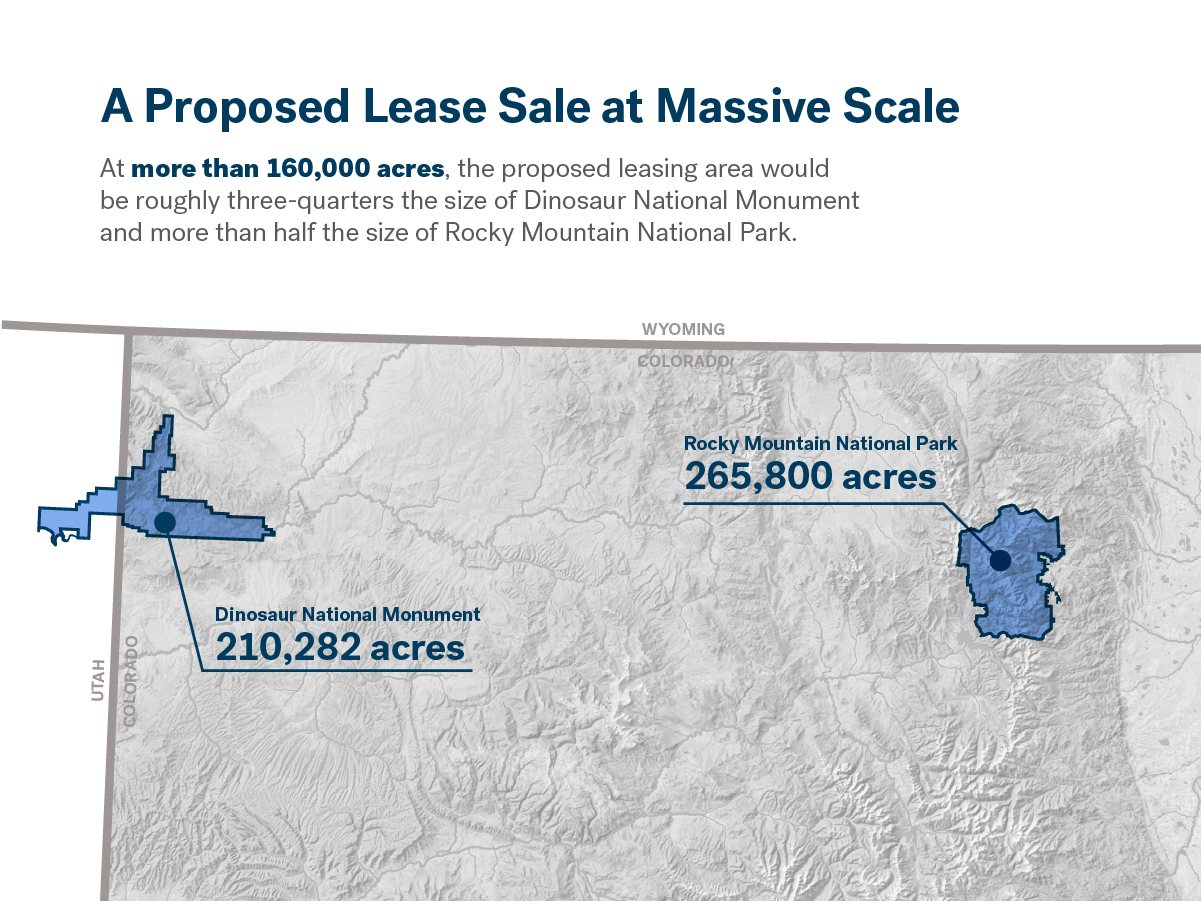
Surging oil and gas lease sales threaten public lands and communities in Colorado
In March, BLM held its largest Colorado lease sale in recent history. Many of the parcels overlap directly with sensitive conservation areas—backcountry and hunting lands across Routt, Rio Blanco, and Garfield counties, including the beloved Book Cliffs; scenic canyons and mesas near the Grand Mesa Scenic Byway; critical big game and sage-grouse habitat; and even land near Aurora Reservoir, which supplies drinking water to more than 400,000 people.
As drilling expands, so do the risks to Colorado wildlife. Species like mule deer, elk, greater sage-grouse, mountain lions, and migratory birds face growing pressure as roads and drilling infrastructure fragment habitat and strain already stressed landscapes. The expansion also brings more pollution and threats to critical water resources.
Policies that elevate drilling above all other uses don’t just threaten landscapes; they put a major part of Colorado’s economy at risk. Outdoor recreation alone supported 404,000 jobs in the state in 2023—more than six times the employment tied to the oil and gas sector.
“Families, hunters, anglers, and outdoor recreationists all rely on our public lands for quality of life, economic opportunity, and cultural connection,” said Jim Ramey, Colorado State Director for The Wilderness Society.
“Coloradans want to protect those freedoms that our pubic lands provide. They want a balanced approach that doesn’t put oil and gas above all else,” Jim Ramey, Colorado State Director
An alarming trend across the West
The surge in leasing reveals a pattern of deliberate policy choices that favor industry over the public good.
“Based on the new law, BLM is letting industry have its way on leasing land critical to wildlife and in increasingly sensitive areas,” said Taylor Luneau, Colorado conservation manager for The Wilderness Society.
“Across the West, you can see the same pattern taking shape,” Luneau said.
The very policies driving leasing in Colorado extend to nine other Western states—Alaska, Arizona, California, Idaho, Montana, Nevada, New Mexico, Utah, and Wyoming—where BLM manages vast stretches of public land.
In Alaska, for example, oil companies have been invited to lease lands in the once-protected coastal plain of the Arctic National Wildlife Refuge—a landscape long considered off-limits because of its ecological and cultural significance.
In New Mexico, the administration proposed a revocation of the 20-year oil and gas ban in the Greater Chaco Region, threatening one of the Southwest’s most culturally significant protected landscapes.
In Wyoming, BLM is offering massive lease sales, many of which conflict with wildlife habitat, while also reopening a land management plan for the Northern Red Desert and Big Sandy Foothills in the southwestern part of the state, where Wyoming's longest pronghorn antelope migration takes place.
Across the West, the direction is clear: more land, fewer safeguards, faster approvals.
Read about other lands at risk in our Not For Sale report.
They drill, we pay
Compounding the problem is the expected rollback of the 2024 BLM Oil and Gas Leasing Rule, which requires companies to cover cleanup costs and steers leasing away from sensitive wildlife habitat, migration corridors, recreation areas, and historic sites.
Without it, taxpayers—not industry—could be left on the hook for billions in cleanup costs from as many as 3.8 million new wells.
At the same time, public engagement is being squeezed out.
Some public comment periods have been exceptionally short (7 days in Chaco’s case) and could be eliminated altogether—giving Tribes, local governments, and communities less time and fewer ways to weigh in on decisions that affect their livelihoods.
Oil and gas companies already have more lands than they use
What the administration won’t say is that oil and gas companies already hold more leases on public land than they can realistically develop. These leases are so inexpensive that companies can stockpile them for years with little financial pressure to act.
For example, 74 percent of all BLM lands in Colorado are already available to oil and gas leasing. The push to lease more isn’t about necessity—it’s about favoring the oil and gas industry over long-term public benefit.
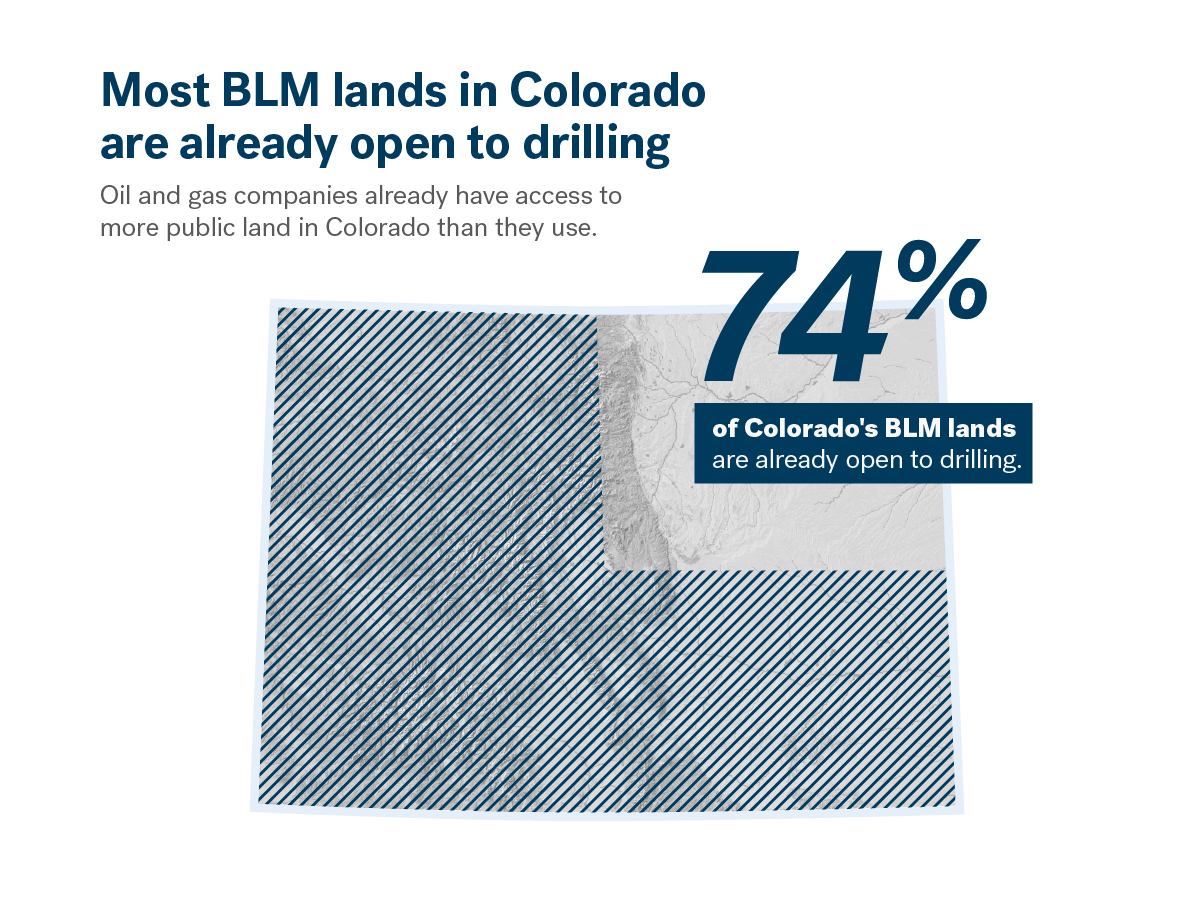
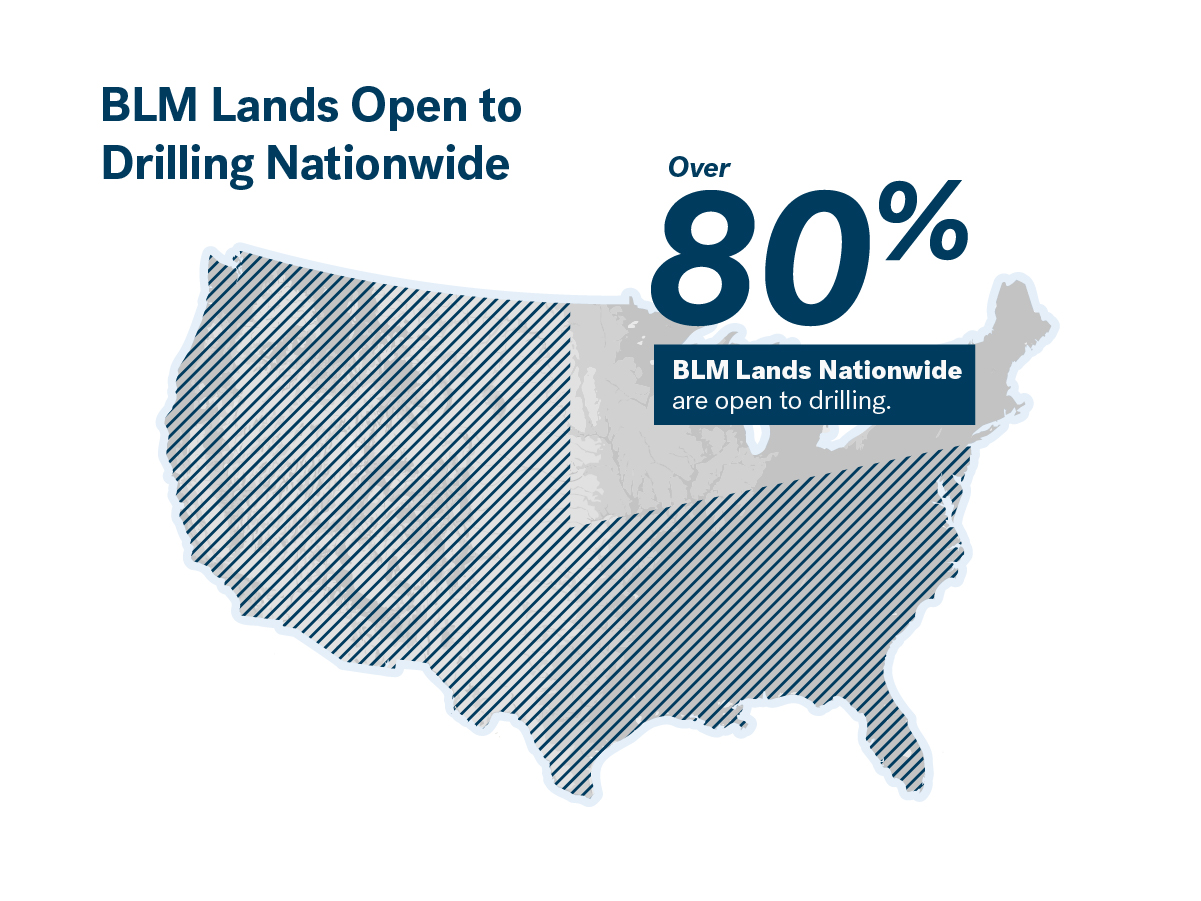
What comes next isn’t just up to policymakers—it’s up to the public.
Polls show Americans aren't on board
Across the country, voters support a more balanced approach that meets energy needs while protecting public lands.
In fact, 70% of voters oppose fast-tracking oil, gas, and mining projects by weakening environmental reviews and limiting public input, according to a 2026 Colorado College poll.
And 74% oppose requiring the government to allow oil and gas companies access to lands they can develop, even if communities raise concern about impacts on wildlife, water or communities.
What you can do
-
Use the lease tracker
Stay informed. If you are in Colorado, monitor lease sales near you through our lease sale tracker.
-
Submit public comments
Participate in public comment periods to build the record of how Americans really feel. Sign up for WildAlerts and we'll let you know about important opportunities to weigh in.
